Film Faced Plywood is built for jobs where ordinary boards wear out quickly. Its smooth, resin-coated surface helps concrete release cleanly, while the plywood core provides strength across broad formwork panels. On site, that can mean fewer visible grain marks, straighter slab edges, and panels that can be reused when handled and stored correctly. Results still depend on the panel grade, thickness, support spacing, and concrete mix.
A practical way to describe its role is: “The film is the working face; the plywood core carries the load.” This is an explanatory summary, not a verified quotation from a named industry expert. For a reliable guide, any personal expert quote should be checked against a traceable interview or published source before use. That detail matters. Product claims vary, and “reusable” does not mean endlessly reusable.
Beyond concrete formwork, Film Faced Plywood may suit truck flooring, temporary site platforms, and other applications needing a durable, wipe-clean surface. A muddy boot leaves a different mark from a clean release agent; edges can swell if water enters damaged areas. So inspect the film, seal exposed edges where appropriate, and follow the manufacturer’s load and handling guidance. This article will look at common uses, selection factors, and care—while keeping one limitation in view: the right panel depends on the job, not just its glossy face.
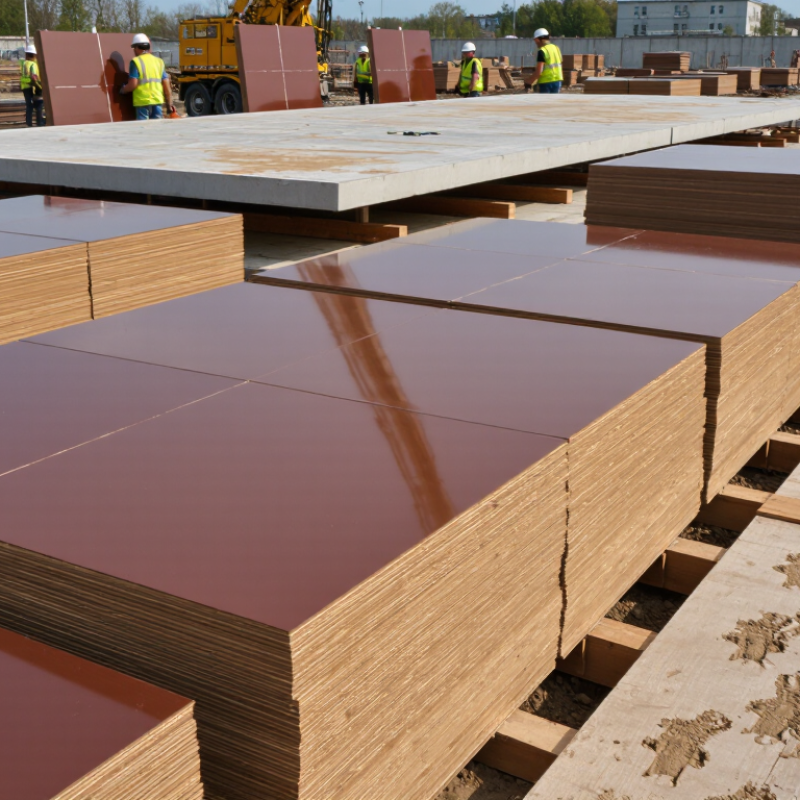
Film-faced plywood is often selected for concrete formwork, where a smooth face helps produce cleaner concrete surfaces. Its resin-treated film resists moisture and abrasion better than an uncoated veneer. The plywood core provides stiffness, while cross-laminated veneers help limit movement across the panel.
The USDA Forest Products Laboratory’s Wood Handbook reports typical solid-wood shrinkage of about 6–12% tangentially and 3–6% radially; plywood’s layered construction helps reduce this uneven movement. It does not make panels immune to swelling.
The surface matters. A sealed film can release from concrete more easily, but damaged edges may still absorb water. That can cause swelling, delamination, or uneven panel thickness after repeated wet cycles. EN 314-2 classifies plywood bond quality for different exposure conditions, including exterior use; buyers should check that the panel’s bonding class matches the job. A strong face cannot compensate for a weak core.
These properties also suit reusable floor protection, vehicle linings, and temporary site barriers. On a worksite, grit dragged under a panel can scratch its film, and standing water can reach exposed edges. Reuse life depends on handling, cleaning, storage, and the number of concrete pours—not just the film thickness. That detail is easy to overlook. The right choice balances surface wear resistance, panel stiffness, thickness, and edge protection against the actual load and conditions.
Film-faced plywood is widely used to form concrete walls, slabs, columns, and beams. Its smooth, resin-coated face helps produce a cleaner concrete surface and release the panel after casting. On site, crews position sheets against the frame, brace them, and seal joints to limit grout leakage. Edges need care.
Repeated use depends on handling, not just the film. Clean off concrete residue promptly, apply a suitable release agent, and store sheets flat and dry. Inspect for swelling, damaged film, loose plies, and enlarged nail holes before each pour. Small details matter. A panel may look usable yet still bow under pressure, so follow the project’s formwork design and support spacing.
Reuse can reduce replacement material, but the number of safe cycles varies with workmanship, concrete conditions, and panel quality. Eurostat reports that construction and demolition activities generate more than one-third of the European Union’s waste. That figure makes careful reuse relevant, though it does not guarantee that every sheet can be reused. The 2023 Global Status Report for Buildings and Construction estimates that the sector produced 37% of global energy- and process-related carbon dioxide emissions in 2022. Reusable shuttering is one practical consideration; inspection and responsible disposal still matter.
| Formwork Application | Typical Panel Thickness | How It Is Used | Key Benefit | Reuse Considerations |
|---|---|---|---|---|
| Concrete walls | Typically 15–21 mm | Fixed to a designed frame of studs and walers to contain fresh concrete during placement and curing. | The smooth coated face can produce a relatively even concrete surface and helps limit moisture absorption. | Clean promptly after stripping, avoid damaging the film, and reseal exposed edges when needed. |
| Floor slabs | Typically 18–21 mm | Laid over joists or other designed supports as the concrete-facing deck. | Large panels can cover broad areas with fewer joints than smaller pieces. | Reuse depends on support spacing, concrete loads, handling, cleaning, and storage conditions. |
| Columns and piers | Typically 15–21 mm | Cut or assembled into column boxes and secured with suitable ties or clamps. | The coated surface can help achieve a consistent finish across repeated pours. | Protect cut edges and corners from impact and water ingress between pours. |
| Beams and downstands | Typically 18–21 mm | Used for beam soffits and sides, supported by a formwork system designed for the wet-concrete load. | Can be cut to suit the required form shape and used alongside other shuttering components. | Inspect for cracks, delamination, damaged film, and excessive deflection before reuse. |
| Foundations and ground beams | Typically 12–18 mm | Used as temporary shuttering for foundation sides and similar below-ground concrete elements. | Provides a practical, workable panel surface for forming straight concrete edges. | Soil moisture and rough handling can shorten service life; clean and dry panels before storage. |
| Curved or irregular forms | Thickness selected for the required curve and support design | Panels may be cut or flexed within suitable limits to form non-standard shapes. | Offers flexibility for custom formwork layouts when the panel construction permits it. | Do not force a panel beyond its safe bending capacity; check for cracking or face damage. |
| General reusable shuttering | Commonly available in 12, 15, 18, and 21 mm options | Used as a temporary concrete-contact facing in a properly braced formwork assembly. | Film coating can make the surface easier to clean than untreated plywood. | There is no guaranteed number of uses; performance varies with panel quality, design, workmanship, and maintenance. |
Note: Thicknesses shown are common application ranges, not structural design specifications. Select panel thickness, supports, ties, and bracing according to the project design, concrete pressure, pour rate, and applicable safety requirements.
Film faced plywood can provide a tough surface for temporary floors in workshops, construction areas, and event spaces. Its coated face resists spills and routine scuffing better than unfinished plywood, and it is easier to wipe clean. A smooth film can become slippery when wet, though. Grip matters. Choose a textured face where foot traffic or damp conditions are expected, and keep the surface clear of mud and loose debris.
For walkways, sheets can create a firm route over uneven ground or protect existing flooring from carts and equipment. Support the panels evenly, secure them against movement, and check joints for raised edges that could catch a shoe or wheel. The coating helps, but it does not make a panel waterproof; exposed cut edges can absorb moisture and swell. Sealing those edges can help extend service life.
Temporary platforms need more than a durable top face. Panel thickness, support spacing, fasteners, and expected loads all affect performance. A sheet that feels solid over close supports may flex noticeably across a wider gap. That detail is easy to overlook. Inspect panels for cracks, delamination, and excessive deflection before use, and replace damaged pieces rather than assuming the film will hold them together. The right setup depends on the actual span and load, not appearance alone.
These commonly available sheet formats provide about 2.98–4.50 m² of panel area, useful for estimating material needs for flooring, walkways, and temporary platforms. Availability varies by market; choose panel thickness and support spacing according to the expected load and project requirements.
Film faced plywood is useful in transport and packaging because its coated surface handles frequent contact better than unfinished panels. In truck beds, trailers, and reusable shipping crates, it can resist scuffs, splashes, and dirt during loading. A pallet box carrying machine parts, for example, benefits from a smooth panel that is easier to wipe clean.
Not forever. Standing water and damaged coatings can still cause problems.
For industrial applications, the panels often serve as temporary floors, protective linings, work platforms, and equipment guards. Their strength depends on plywood grade, thickness, support spacing, and how loads are distributed. A heavy component placed between supports may cause deflection, even when the panel looks substantial.
Edges still matter. Sealing cut edges and checking fasteners helps limit moisture entry and loosening during vibration.
Film faced plywood is not a universal substitute for metal or purpose-built structural panels. It can be practical where crews need a strong, replaceable surface that tolerates rough handling. Yet the coating may wear, and repairs are not always neat. Choosing a panel means balancing weight, reuse, exposure, and load requirements, then inspecting it after demanding trips or repeated shop use.
What Is Film Faced Plywood Used For?
Selecting the Right Grade for Each Application
Film faced plywood is commonly used for concrete formwork, vehicle floors, and reusable site panels. The right choice depends on more than the smooth, resin-coated surface. Check the core quality, panel thickness, bonding class, and expected number of pours. For concrete forms, a stable core helps reduce flexing and uneven impressions. For floors, surface durability and secure fixing matter more.
Use the bond classification as a practical guide. EN 314-2 defines Class 1 for dry conditions, Class 2 for humid conditions, and Class 3 for exterior conditions. These classes describe bond durability, not guaranteed reuse cycles. A panel’s face grade and core construction also affect performance, and grade names can differ between suppliers. A detail people sometimes miss: exposed edges can absorb water, even when the faces are coated.
Tips: Match the panel to its exposure and load, then check its technical sheet. Keep panels flat and dry before use. The USDA Forest Products Laboratory’s Wood Handbook reports equilibrium moisture content near 12% at 70°F and 65% relative humidity. That figure is a useful storage reference, not a universal jobsite limit. Seal cut edges where appropriate, and inspect panels after each use. One weak core can spoil a clean pour.
It is used for concrete formwork, vehicle floors, temporary walkways, platforms, and reusable shipping crates. The coated face wipes clean more easily than unfinished plywood.
Yes, it can create a firm route over uneven ground or protect floors from carts. Support sheets evenly and secure them against movement. Check for raised joints.
Yes. A smooth film can be slippery when wet. Choose a textured face where damp conditions or frequent foot traffic are expected.
No. Cut edges can absorb moisture and swell, even when the faces are coated. Sealing exposed edges can help. That detail is easy to miss.
Check thickness, support spacing, fasteners, and expected loads. A panel may flex across a wide gap, even if it feels solid on close supports.
Look for cracks, delamination, loose fasteners, and excessive bending. Replace damaged pieces rather than trusting the coating to hold them together.
EN 314-2 describes Class 1 for dry conditions, Class 2 for humid conditions, and Class 3 for exterior conditions. These classes describe bond durability, not guaranteed reuse cycles.
Not in every application. It can provide a strong, replaceable surface, but coating wear, load limits, and repeated exposure matter. I may be overcautious, but inspect it after rough trips.
Film Faced Plywood is valued for its smooth, durable surface, resistance to moisture, and ability to withstand repeated use. These properties make it especially useful for concrete formwork and reusable shuttering, where panels help create consistent concrete surfaces and can be used across multiple pours when properly handled. Its strength and relatively even surface also suit temporary flooring, walkways, and work platforms, providing a practical base for sites and other demanding environments.
Beyond construction, Film Faced Plywood can be used in transport, packaging, and industrial settings where sturdy panels are needed to protect goods or support equipment. Choosing the right grade depends on the intended load, expected exposure to moisture, required surface finish, and how often the panel will be reused. Matching these factors to the application can improve performance, extend service life, and reduce unnecessary material use.