0%

Choosing the best Concrete Formwork Plywood from China is not simply a matter of comparing prices or board thickness. The right panel must suit the pour, frame spacing, expected reuse, and site conditions. A sheet that looks smooth in a showroom may behave differently after repeated wetting, stripping, and cleaning. Small details matter: sealed edges, consistent thickness, sound veneer bonding, and a film that stays attached at corners.

Wood-science researcher Dr. Arijit Sinha studies wood materials and their performance. Rather than attribute an unverified quotation to him, this guide applies a practical principle: judge plywood by its construction and performance, not by its label alone. That distinction matters. “Shuttering plywood” can describe products with very different core quality, adhesive bonding, and surface durability.

There is no single best panel for every project. A contractor pouring columns may value a different face finish than a crew forming large wall sections. Compare technical data with a sample inspection. Check for flatness, exposed core gaps, damaged edges, and clear reuse guidance. Ask suppliers for consistent specifications and documentation for the exact product offered. Then test a small batch under realistic site conditions, because catalog claims do not show every weakness.

Some uncertainty remains. Usage life depends on handling, release agents, storage, and workmanship, so avoid promises of a fixed number of pours. This article’s outline examines the main grades, specifications, supplier checks, and selection trade-offs. The aim is practical: help buyers choose a reliable Concrete Formwork Plywood option from China without confusing a low quote with long-term value.
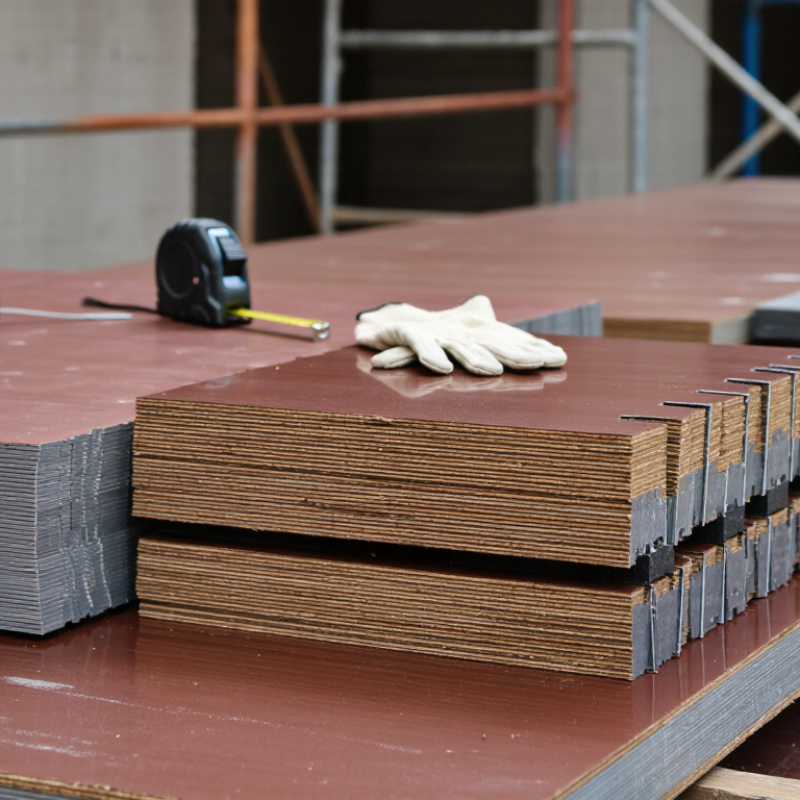
What Is the Best Concrete Formwork Plywood from China?

What Concrete Formwork Plywood Is and How It Is Used

Concrete formwork plywood is an engineered panel used to shape freshly poured concrete. It usually has layered wood veneers bonded with adhesive, with a smooth, moisture-resistant surface on one or both sides. The panel holds wet concrete until it gains enough strength to support itself. It is common in walls, columns, floor slabs, and smaller cast-in-place structures.

On site, workers cut panels to size, fasten them to a timber or metal frame, and seal joints to limit paste leakage. The surface finish matters. A clean, coated face can leave concrete smoother, while damaged edges may create marks or allow water to enter. The plywood must also resist pressure from the pour, so thickness, support spacing, and fastening need to match the project design. Guessing is risky.

After pouring, crews remove the formwork when the concrete can safely retain its shape, then clean and inspect each panel. Reuse depends on careful handling. Nails can tear the surface, and concrete residue is difficult to remove once it hardens. Not every panel performs the same. Even well-made plywood can warp if stored flat in standing water or left exposed to weather. In practice, storage and workmanship matter as much as the panel itself.

Which Properties Determine Formwork Plywood Performance

Concrete formwork plywood performs well when its surface, core, and bonding suit the site conditions. A smooth, durable film helps limit concrete sticking and reduces marks on the finished face. The core should have evenly arranged veneers, sound edges, and few voids. Hidden gaps can weaken a panel under pressure. That matters.

Thickness consistency and panel flatness also affect support spacing and finished concrete dimensions. Stiffness depends on the plywood’s construction, not thickness alone. Check technical data for bending strength and moisture resistance, then compare it with the expected pour height and reuse cycle. Strong glue bonds help prevent layers separating after repeated wetting, but damaged edges can still admit water. In practice, edge sealing and careful handling are easy to overlook. No single property guarantees long service life.

Tips: Inspect a sample panel before ordering. Check its thickness at several points, look for blisters or open edges, and test how firmly screws hold. Store sheets flat and dry. A small site trial can reveal problems that a specification sheet misses.

What Is the Best Concrete Formwork Plywood from China? – Which Properties Determine Formwork Plywood Performance
Property Typical Specification or Options Why It Matters What to Check Before Buying
Thickness Common options include 12, 15, 18, and 21 mm. Thickness affects stiffness and deflection. The suitable choice depends on support spacing, concrete pressure, and the formwork design. Confirm actual thickness and tolerance on the technical data sheet; do not select by thickness alone.
Panel size Common formats include 1220 × 2440 mm and 1250 × 2500 mm; other sizes may be available. Panel dimensions affect layout, joint locations, cutting waste, and handling. Check delivered dimensions, squareness, and whether the chosen size fits the formwork layout.
Core species and construction Poplar, eucalyptus, hardwood, or mixed-wood veneer cores are used. Veneer quality and layup vary by product. Core uniformity, veneer thickness, and bonding influence stiffness, strength, weight, and resistance to damage at edges and fasteners. Request the core description and inspect samples for gaps, overlaps, delamination, and uneven construction.
Density and weight Approximately 500–700 kg/m³ is a broad indicative range for many plywood products; actual values depend on species, construction, and moisture content. Density can affect panel weight and handling, but it does not by itself establish bending performance or service life. Compare declared density or panel weight alongside test results and construction details.
Bonding and moisture resistance Phenolic-resin bonding is commonly specified for concrete formwork plywood intended for repeated wet use. Bond performance should be supported by a relevant test report. Sound glue bonds help resist delamination during exposure to wet concrete and cleaning. A water-resistant bond does not make the panel waterproof in every condition. Ask for the applicable bonding classification and test method, such as EN 314-2 where relevant, and verify the report matches the supplied product.
Face film and surface quality Film-faced panels are commonly offered with phenolic film weights such as 120, 180, or 220 g/m². These are product options, not universal performance grades. Film quality and surface integrity affect concrete finish, release, and resistance to abrasion and cleaning. Check film coverage, surface defects, and the manufacturer’s stated film weight and test data.
Edge sealing Edges are often sealed with paint or another coating; the type and coverage vary by product. Sealed edges can slow moisture uptake through cut edges and help reduce swelling or veneer separation during use. Inspect all edges and reseal cut or damaged areas according to the supplier’s instructions.
Bending properties and stiffness Values depend on thickness, veneer species, layup, and test direction. Request declared bending strength and modulus of elasticity tested under a stated method, such as EN 310 where applicable. These properties help assess load capacity and deflection between supports; both directions may matter because plywood can be direction-dependent. Use verified test data with the project’s design loads and support spacing rather than relying on a generic “high strength” claim.
Dimensional stability and flatness Performance depends on veneer moisture, layup, bonding, storage, and exposure conditions. Warping or uneven panels can create alignment problems, inconsistent concrete surfaces, and difficult joints. Inspect panels on a flat surface and store them dry, level, and protected before use.
Reuse potential There is no reliable universal reuse-cycle count. Actual reuse depends on panel construction, concrete mix, handling, cleaning, release agent, and storage. Careful handling and maintenance often matter as much as the initial panel specification. Treat any cycle claim as application-specific and request the conditions and evidence behind it.
Selection conclusion The best formwork plywood is the panel whose verified stiffness, strength, bonding, surface, and dimensions suit the project’s design and working conditions. Compare current test reports, product samples, and applicable standards; no single thickness, core species, or film weight is best for every project.

What Types of Concrete Formwork Plywood China Produces

Concrete formwork plywood made in China is not one single product. The main type is film-faced plywood, with a smooth resin film on one or both faces. Brown and black films are common, but color alone does not prove quality. The core may use poplar, eucalyptus, hardwood, or mixed veneers. Each combination affects weight, stiffness, and edge durability.

A second distinction is the core construction. Some panels use uniform veneers; others combine different wood species to balance cost and strength. Phenolic-bonded panels are designed to resist moisture during concrete pours, while lower-cost options may use other adhesive systems. Ask for the panel thickness, core details, bond classification, and test data. Check a cut edge, too. Gaps and loose veneers can weaken screw holding.

Surface choices include smooth film faces and textured finishes, which can leave different impressions on cured concrete. Plastic-coated panels are also available, though their surface and repair needs differ from conventional film-faced sheets. Reuse life varies. It depends on concrete mix, cleaning, storage, and careful stripping, so treat supplier estimates as estimates, not guarantees. A small sample pour can reveal surface marks, swelling, or edge damage before a large order. One detail is easy to miss: a durable face cannot compensate for a weak core.

How to Evaluate Chinese Plywood Specifications and Suppliers

Concrete formwork plywood should be judged by the job it must survive, not by a “marine” label alone. Check nominal thickness, panel size, core construction, face veneer, overlay type, and permitted thickness variation. Ask how measurements are taken. An 18 mm panel may vary across a batch.

Specifications must match practical conditions: pour pressure, panel spacing, expected reuse, and water exposure. Phenolic film can improve release, but edge sealing and careful storage matter too. Check the edges. Request recent test reports for bonding and formaldehyde emissions, then confirm the test methods and sample identity. Documents help, but they are not proof by themselves.

When evaluating a supplier, request a production sample, written tolerances, batch traceability, and packaging details. Ask what happens if delivered panels differ from the approved sample. A factory audit or independent inspection can reveal veneer gaps, uneven coating, and damp storage that photos miss. Small details matter. Compare landed cost, including freight, rejected sheets, and replacement terms. Claimed reuse counts are rarely transferable; site handling can change them sharply. A clear answer is better than a perfect promise.

How to Match Formwork Plywood to Project Requirements

What Is the Best Concrete Formwork Plywood from China?

How to Match Formwork Plywood to Project Requirements

Choosing formwork plywood starts with the pour, not the country of origin. Check concrete pressure, panel span, reuse targets, and surface-finish requirements. ACI 347R-14 identifies concrete unit weight, placement rate, temperature, and slump as factors in estimating formwork pressure. Normal-weight concrete is commonly taken as about 2,400 kg/m³, but the actual mix and pour plan matter. A fast pour can load panels and supports heavily. Use the project’s expected conditions when checking panel thickness and support spacing.

Moisture matters, too. The USDA Forest Products Laboratory’s Wood Handbook places wood’s fiber-saturation point near 30% moisture content; below this level, moisture changes can affect wood dimensions and strength. For wet sites, inspect sealed edges and faces, and keep panels off muddy ground between pours. Match the overlay and core construction to the required finish and planned number of uses. Ask suppliers for verified thickness, bond-quality, and performance documentation, then check samples against the specification. Small edge damage can admit water. One practical detail is easy to miss: a panel that works for a short wall may deflect on a taller pour. I would not rank plywood by one property alone; site handling can undermine a good specification.

What Is the Best Concrete Formwork Plywood from China?

Estimated panel weight by thickness — a practical handling and planning comparison

Estimates use a plywood density of 600 kg/m³ and the formula: thickness × density. Actual panel weight varies by core material, moisture and manufacturer. Choose thickness based on the designed concrete pressure, support spacing, required surface finish and reuse plan; confirm load capacity with project-specific engineering data.

FAQS

What is concrete formwork plywood?

It is made from bonded wood veneers. The panel holds wet concrete in shape until the concrete can support itself.

Where is formwork plywood commonly used?

Crews use it for walls, columns, floor slabs, and smaller cast-in-place structures. Panels attach to timber or metal frames.

What does a smooth panel surface do?

A clean, coated face can leave smoother concrete. Damaged edges may leave marks or let water enter. Small flaws show.

What types of formwork plywood are available?

Film-faced panels are common, with smooth resin surfaces on one or both sides. Textured and plastic-coated options are also available.

Does the film color show panel quality?

No. Brown or black film does not prove quality. Check the core, thickness, bond details, and test data instead.

How can crews check a panel’s core?

Inspect a cut edge for gaps or loose veneers. These defects can weaken screw holding and panel strength.

What affects how many times a panel can be reused?

Cleaning, careful stripping, and dry storage all matter. Concrete residue can harden on the face, and nails can tear it.

How should panels be stored?

Keep them protected from weather and standing water. Even sound plywood can warp when left wet. Storage is easy to overlook.

Should a sample pour be tested before a large order?

Yes. It can reveal surface marks, swelling, or edge damage. Supplier reuse estimates are not guarantees, so a sample may prevent surprises.

Conclusion

Concrete Formwork Plywood is used to create temporary molds that hold wet concrete in place until it sets. Choosing the right product involves more than comparing thickness or price: performance depends on factors such as panel strength, stiffness, moisture resistance, surface quality, bonding, and the durability of the edges. Chinese manufacturers produce different options, including panels with varied core materials, surface finishes, and reuse potential, so specifications should be reviewed carefully rather than judged by product descriptions alone.

To evaluate suppliers, compare clear technical data, manufacturing consistency, quality-control practices, and sample panels where possible. The best choice depends on the project’s concrete finish requirements, formwork design, expected number of uses, site conditions, and budget. Matching panel characteristics to these needs can help improve casting results, reduce replacement frequency, and support efficient construction. There is no single best plywood for every job; the most suitable option is the one whose verified performance fits the project.

Evelyn

Evelyn

Evelyn is a professional marketing specialist with a strong understanding of the company’s products, customer needs, and the practical challenges its customers face. She regularly contributes expert articles to the company website, sharing clear, useful insights that help readers understand product......